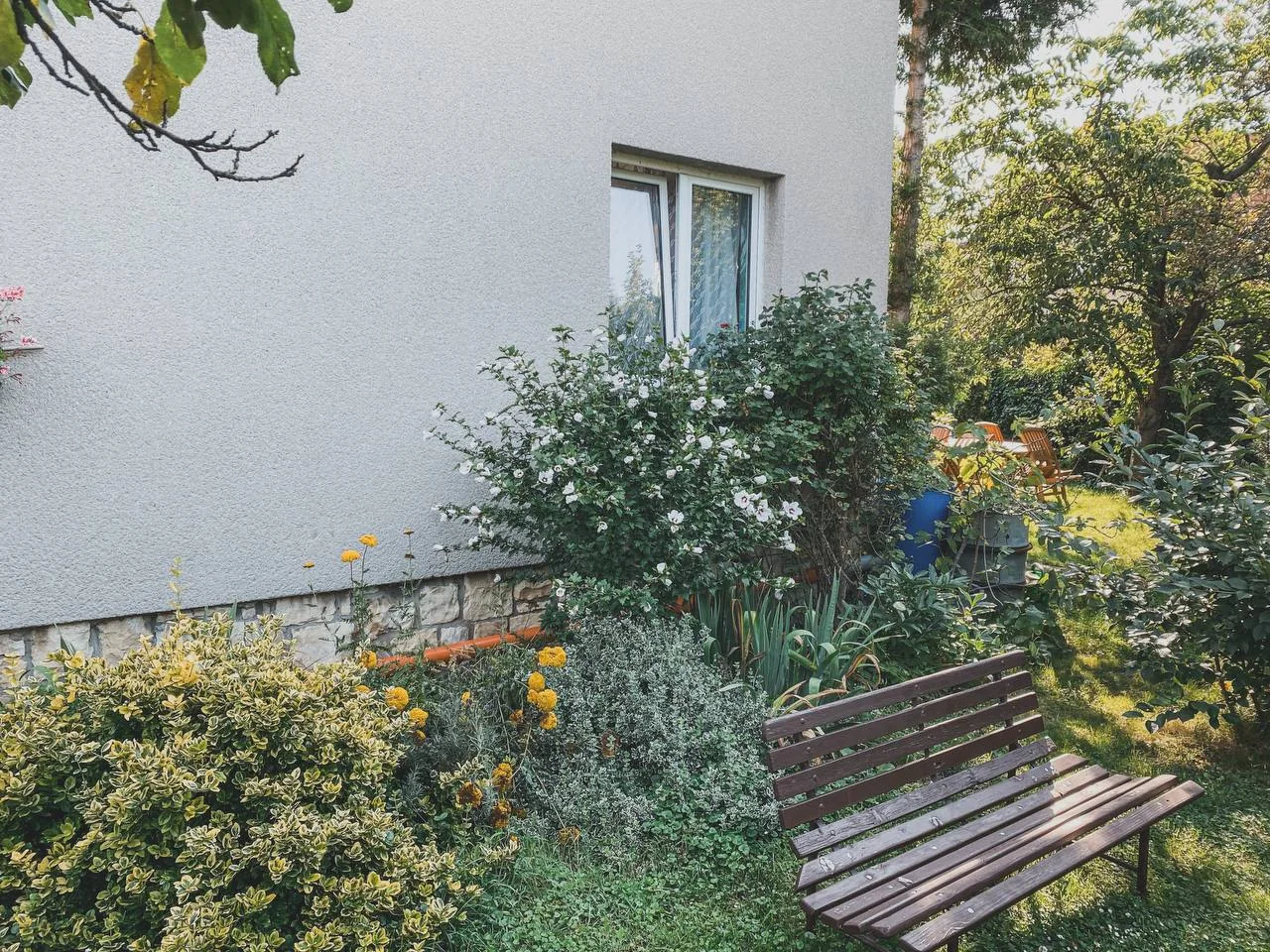
An old garden rarely introduces itself properly. You may recognise the apple tree and the roses, but the spreading groundcover, bare clumps, self-seeded shrubs, and three nearly identical leafy things remain unknown.
Resist the urge to name everything in one afternoon. Plant identification works better as a record built over time. Leaves help, but flowers, fruit, bark, buds, scent, growth habit, and the season in which each feature appears can turn a vague guess into a reliable identification.
The method below gives every mystery plant a temporary identity, a place on the map, and a record you can improve as the garden changes. If you have only recently taken over the space, begin with what to do first in an inherited garden before making broad changes.
Start with safety, not a plant name
Treat every unknown plant as unsuitable to eat until a trustworthy identification says otherwise. Do not taste a leaf, berry, seed, bulb, or root to help identify it. A plant-identification app is not an edibility test. A 2023 Clinical Toxicology study of foraged plants in the American Midwest concluded that the tested apps could not safely identify edible plants.
The Royal Horticultural Society advises against eating unidentified ornamental plants and notes that lists of harmful garden plants are not exhaustive. Some plants can irritate skin or eyes, and sap from cut stems may cause a stronger reaction than casual contact.
For unknown plants:
- wear gloves when handling, cutting, or pulling them;
- cover your arms and legs around irritating sap, thorns, or dense growth;
- avoid touching your face while working;
- wash your hands afterwards;
- keep cut material away from children and pets;
- do not burn unidentified prunings, since smoke can carry irritants;
- get expert advice before dealing with a plant suspected to be highly toxic or invasive.
If someone has eaten part of an unknown plant or has a serious reaction, contact the appropriate medical or poison-information service. Keep a sample or clear photos if this can be done safely.
Map the garden into manageable zones
A name is less useful if you cannot find the plant again. Divide the garden into zones that make sense on the ground: front bed, pond edge, north fence, orchard, greenhouse border, patio pots, or shed corner. A rough hand-drawn map is enough.
Give each zone a short code, then assign every unknown plant a temporary ID. For example:
NF-01: first mystery plant along the north fence;OR-03: third unknown in the orchard;PB-07: seventh plant in the patio bed.
Put the code on a weatherproof label near the plant and use the same code in your notes and photo filenames. The temporary ID stays useful even after you find a likely name. It connects observations from different months and prevents you from creating five separate records for the same clump.
Mark groups as well as individual plants. Ten matching shoots in one bed may be one spreading perennial, several seedlings, or bulbs emerging from a shared planting. Record the patch boundary rather than labelling every stem.
Take a useful set of photographs
One close-up of a leaf often produces confident but conflicting answers. Photograph the plant as a set. Pl@ntNet recommends sharp, well-lit images of several organs, such as leaves, flowers, and fruit. Even when some of those features are missing, a consistent photo sequence makes later comparison much easier.
Take these views where possible:
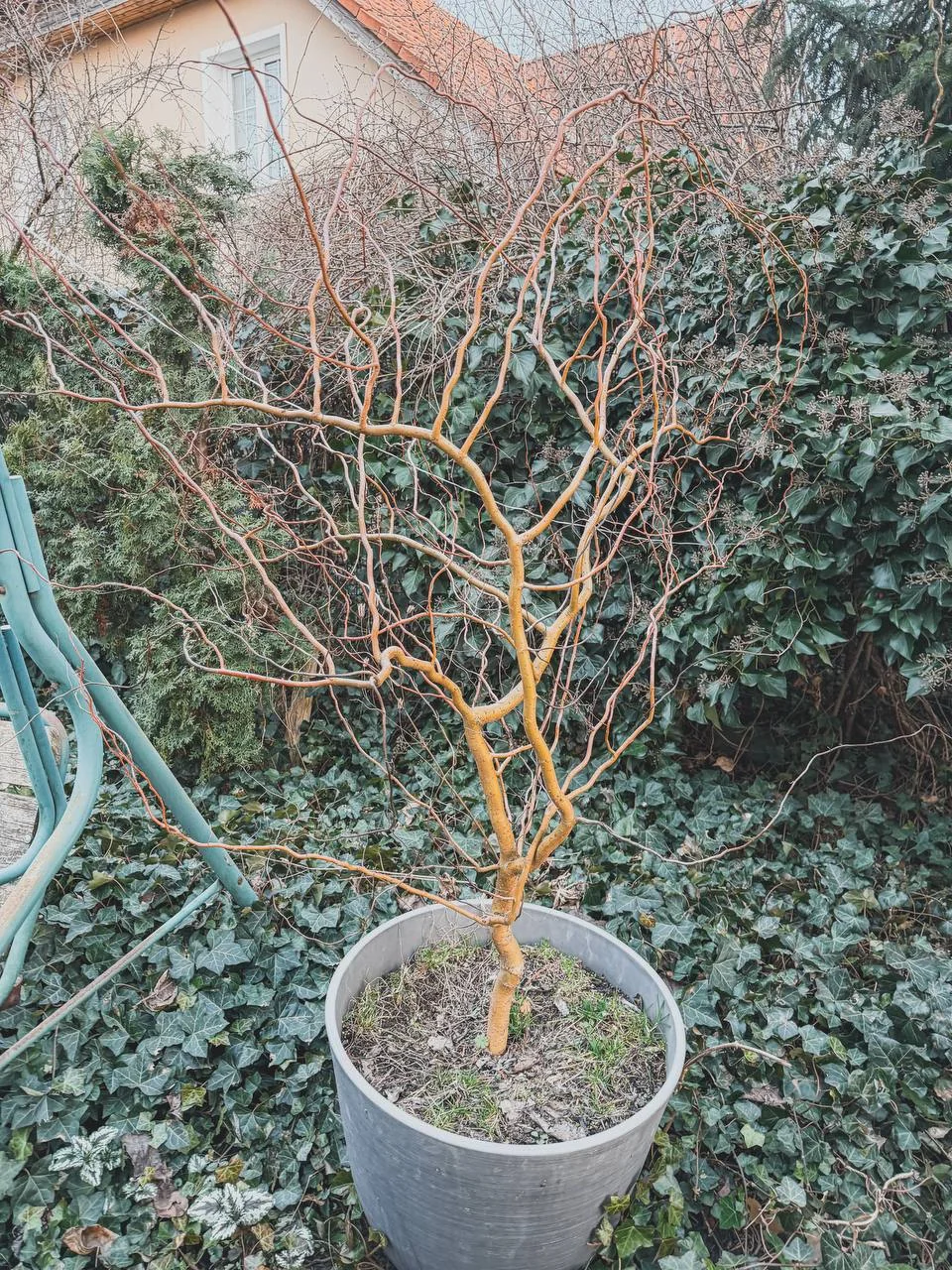
- The whole plant in its setting. Show whether it is a tree, shrub, climber, clump, rosette, grass-like plant, or spreading groundcover.
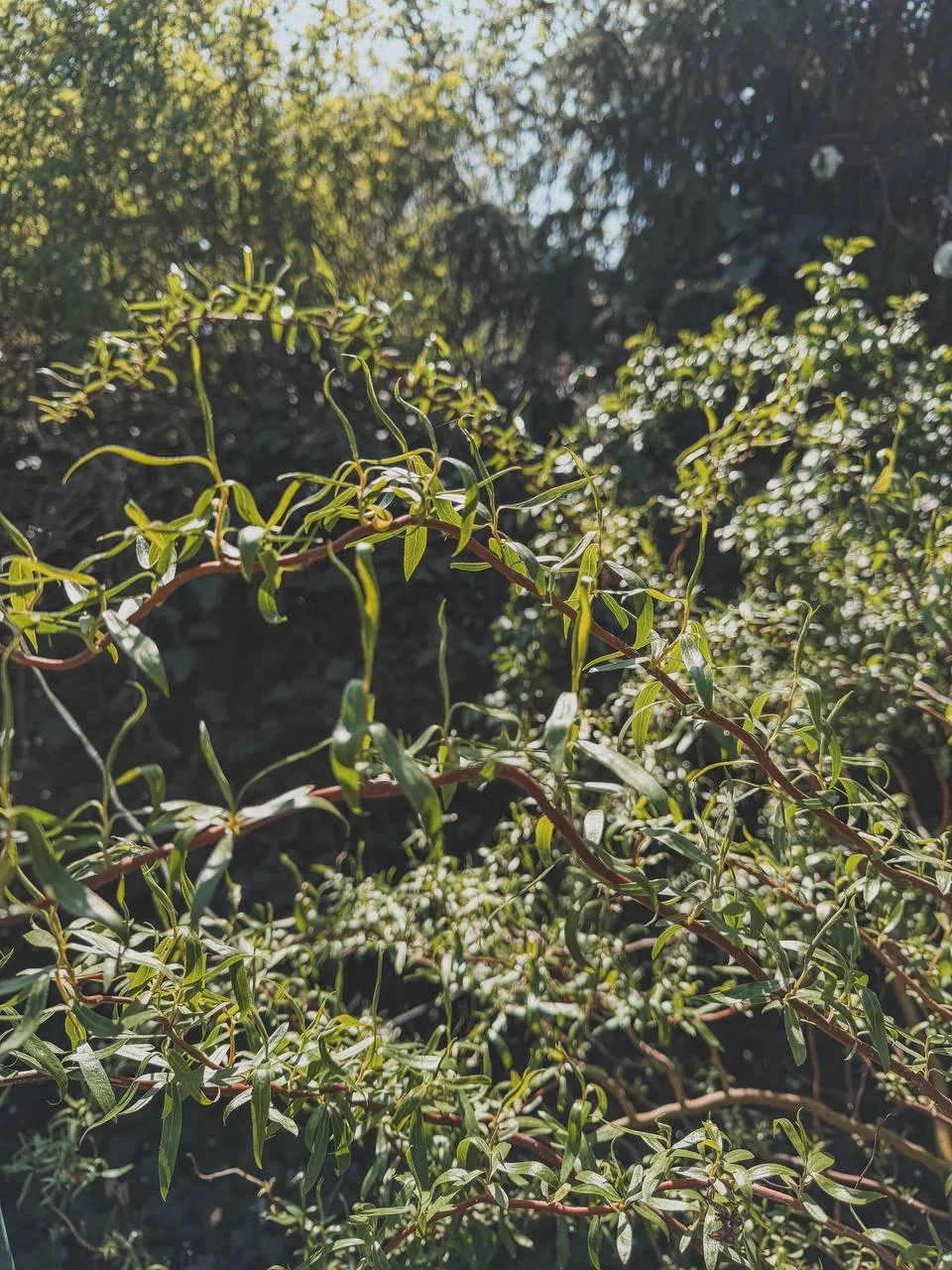
- A full stem or branch. Include how leaves attach and whether they grow opposite each other, alternate along the stem, or form whorls.
- Both sides of a mature leaf. Show its shape, edge, veins, surface, and stalk.
- Flowers or flower buds. Photograph them from the front and side, including how they are arranged on the stem.
- Fruit, seed heads, cones, or pods. Do not open or taste them.
- Bark, thorns, hairs, tendrils, or unusual stems. These can separate plants that otherwise look alike.
- A scale reference. Place a ruler or familiar object nearby without covering the plant.
Use daylight and hold the camera steady. Move stray stems aside if safe, but do not detach the only flower for a cleaner picture. Check that the feature is sharp before leaving the plant. A blurred leaf photographed at dusk preserves mainly the atmosphere.
Record what the camera cannot explain
Add the date and exact zone to every observation. Then record features that may be unclear in a photograph:
- approximate height and spread;
- woody, soft-stemmed, bulb-like, grass-like, or fern-like habit;
- upright, arching, climbing, creeping, or suckering growth;
- evergreen, deciduous, or currently dormant;
- sun, shade, soil moisture, and nearby plants;
- scent from flowers or foliage, noticed without putting unknown material near your mouth;
- milky, coloured, or clear sap if it appears during necessary work;
- whether stems have thorns, prickles, hairs, or a square cross-section;
- evidence of flowers, fruit, seedlings, runners, bulbs, or suckers.
Do not cut a plant merely to inspect its sap. Record sap only if a stem was already broken or had to be removed for safety, and avoid contact.
Revisit the plant through the seasons
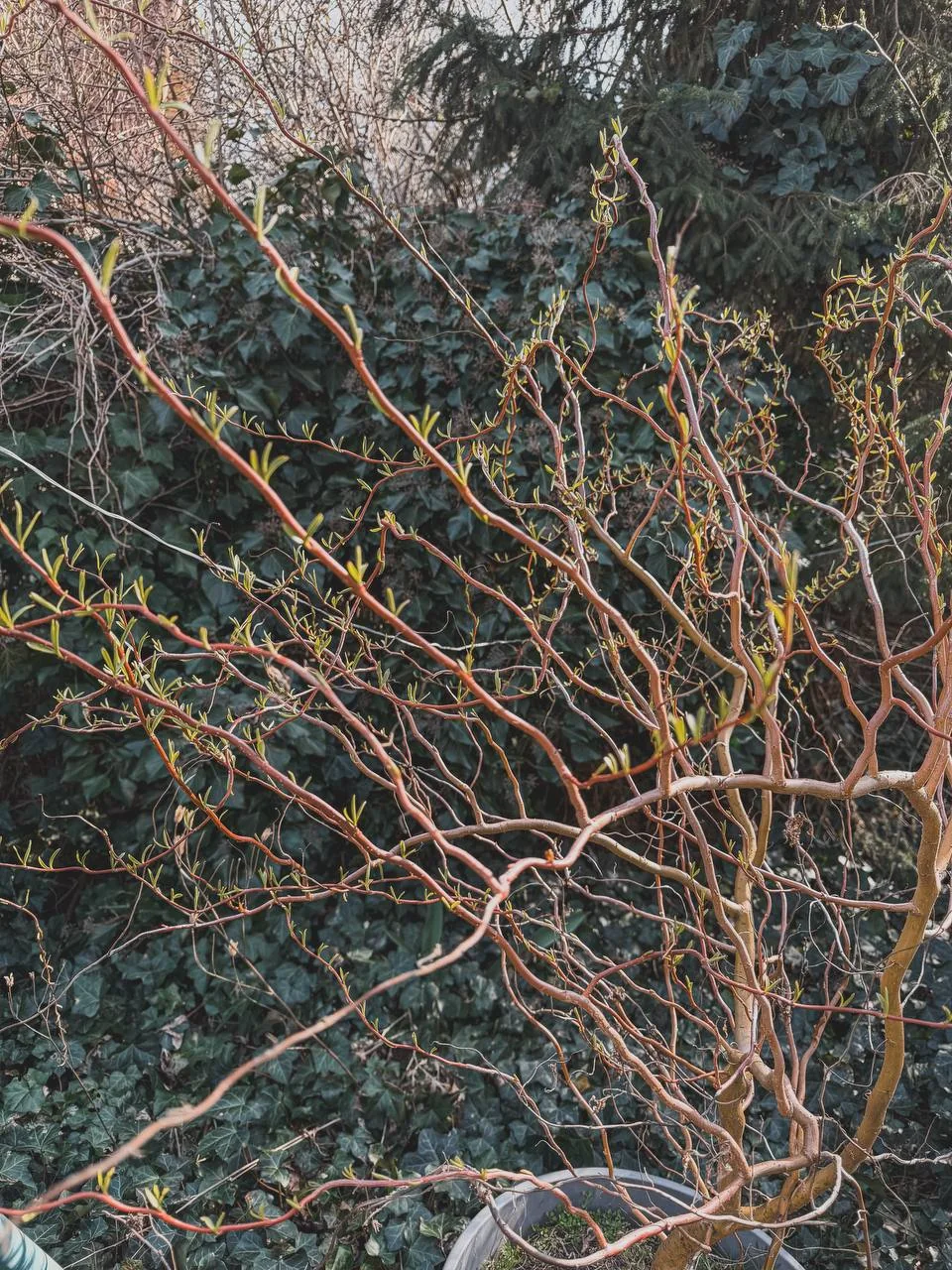
Many plants cannot be identified reliably from one stage. Spring bulbs vanish by summer. Herbaceous perennials die back in winter. Young tree leaves may resemble several related species until flowers or fruit appear. A first-year seedling can look unlike the mature plant.
Set a reminder to revisit each unresolved plant every four to six weeks during active growth, and after any visible change. Useful moments include:
- buds opening;
- first full leaves;
- flowering;
- fruit or seed formation;
- autumn colour;
- leaf fall;
- winter structure.
Take the same whole-plant view each time, then add new details. This creates a short seasonal sequence rather than a pile of unrelated images.
The spring garden checklist can help you combine identification checks with normal seasonal work. In early spring, pay particular attention to emerging bulbs and perennial crowns before weeding or digging around them.
When waiting is the best identification tool
Wait when the plant is harmless, not blocking access, and missing the feature needed for a sound identification. A likely shrub may need flowers. A fruit tree may need fruit, leaves, and a view of its growth habit. A dormant clump may need several months before it reveals whether it is a peony, daylily, iris, or something less welcome.
You should not wait if the plant creates an immediate safety problem, threatens a building, obstructs a path, or appears to be a regulated invasive species. Photograph it without unnecessary handling, keep people and pets away if needed, and ask a local authority, qualified horticulturist, arborist, or invasive-species service for advice.
Use plant apps to produce candidates
Plant apps are useful for narrowing the search. They do not turn one photo into certainty.
Upload the clearest photographs, preferably showing different plant parts. Pl@ntNet returns ranked possibilities for you to compare and validate. iNaturalist can offer automated suggestions, then lets other users confirm or refine an observation. Community review is especially helpful when your first guess is wrong or the plant is common locally but poorly represented in general garden books.
For each suggestion, ask:
- Does the leaf arrangement match, not only the leaf shape?
- Does the flower have the same number and arrangement of petals or florets?
- Do the stem, bark, hairs, thorns, and buds agree?
- Is the mature size and growth habit plausible?
- Does the flowering or fruiting season fit your climate?
- Is the species grown or naturalised in the UK or your part of Europe?
- Can you find a trait that rules the candidate out?
Run more than one good image through the process. If three views suggest the same species and the written description matches, confidence rises. If the leaf says one thing and the flower says another, keep the temporary ID and investigate further.
Confirm the identification with independent evidence
Compare app candidates with a reputable flora, horticultural reference, botanic garden resource, or identification key. Use references relevant to your country or region where possible. Distribution, flowering time, and invasive status vary across Europe.
For difficult plants, share the full observation with an iNaturalist community, local gardening group, botanic garden, nursery, horticultural society, or professional horticulturist. Include the temporary ID, location, date, whole-plant photograph, detail photographs, and your leading candidates. Asking “What is this?” with one detached leaf makes volunteers perform unnecessary detective work.
A practical confidence scale keeps guesses visible:
- Low: one photo or one app suggestion; several candidates remain.
- Medium: several traits match a good reference, but a decisive feature is missing.
- High: leaves, habit, flowers or fruit, season, and regional occurrence agree, with independent confirmation where needed.
Reserve high confidence for plants supported by more than resemblance. For anything involving food, medicine, children, pets, skin exposure, invasive control, or destructive pruning, get an appropriately qualified human confirmation.
Separate species identification from cultivar identification
You may be able to identify a plant as an apple, rose, hydrangea, daffodil, or currant without knowing its cultivar. That is still useful. Species or plant-group identification often tells you the broad care pattern, while cultivar identification may require a labelled history, expert examination, or features seen over several seasons.
Old fruit varieties are particularly difficult to name from fruit colour alone. Size, shape, stalk, eye, season, flavour, flesh, storage behaviour, tree habit, and sometimes formal comparison all contribute. Grafted trees can also produce shoots from the rootstock, so two kinds of foliage or fruit may belong to one tree.
Do not fill an uncertain cultivar field because an app offered a precise answer. Record apple, cultivar unknown or climbing rose, cultivar unknown. If the plant later flowers or fruits in a distinctive way, update the record. Care based on a correct broad group is safer than care based on an elaborate guess.
For an identified apple tree, when to prune apple trees explains how timing changes between free-standing and trained forms. If you still do not know the tree’s fruiting habit, observe it before making repeated cuts.
Turn identifications into a garden inventory
A useful inventory connects identity to action. A spreadsheet, notebook, or garden app can work. Use one row or record for each temporary ID and include:
- temporary ID and garden zone;
- current name, including botanical name when known;
- identification confidence;
- photographs and observation dates;
- key identifying traits;
- deciduous, evergreen, annual, biennial, perennial, bulb, shrub, tree, or climber;
- flowering and fruiting months observed in your garden;
- likely care needs;
- known hazards or handling notes;
- pruning method and timing, if confirmed;
- keep, move, divide, monitor, control, or remove decision;
- source or person who helped confirm it;
- next check date.
Keep observations separate from care advice. Flowered in late May is your evidence. Prune after flowering is a care instruction that needs a reliable source and may depend on the exact plant. Recording the distinction makes later corrections easier.
A repeatable routine for every mystery plant
Use the same sequence each time:
- Mark the plant with a temporary ID.
- Place it on the garden map.
- Photograph the whole plant and useful details with scale.
- Record the date, location, habit, conditions, and seasonal stage.
- Use apps and references to make a shortlist.
- Compare several traits and look for contradictions.
- Ask a community or local expert when the consequences of error are high.
- Record the likely name, confidence level, and supporting evidence.
- Add only care guidance appropriate to that confidence.
- Revisit the plant when new leaves, flowers, fruit, or winter structure appear.
You do not need a complete inventory before caring for the garden. Start with plants near paths, plants that need seasonal pruning, fruiting plants, vigorous spreaders, and anything that may be harmful. The remaining mystery clumps can keep their temporary codes until they provide better evidence.
Gardero is being built to connect a real garden inventory with seasonal care reminders shaped by your plants and local climate. As each temporary ID becomes a dependable identification, you can turn that finding into the next useful task without pretending the whole garden was solved on day one.